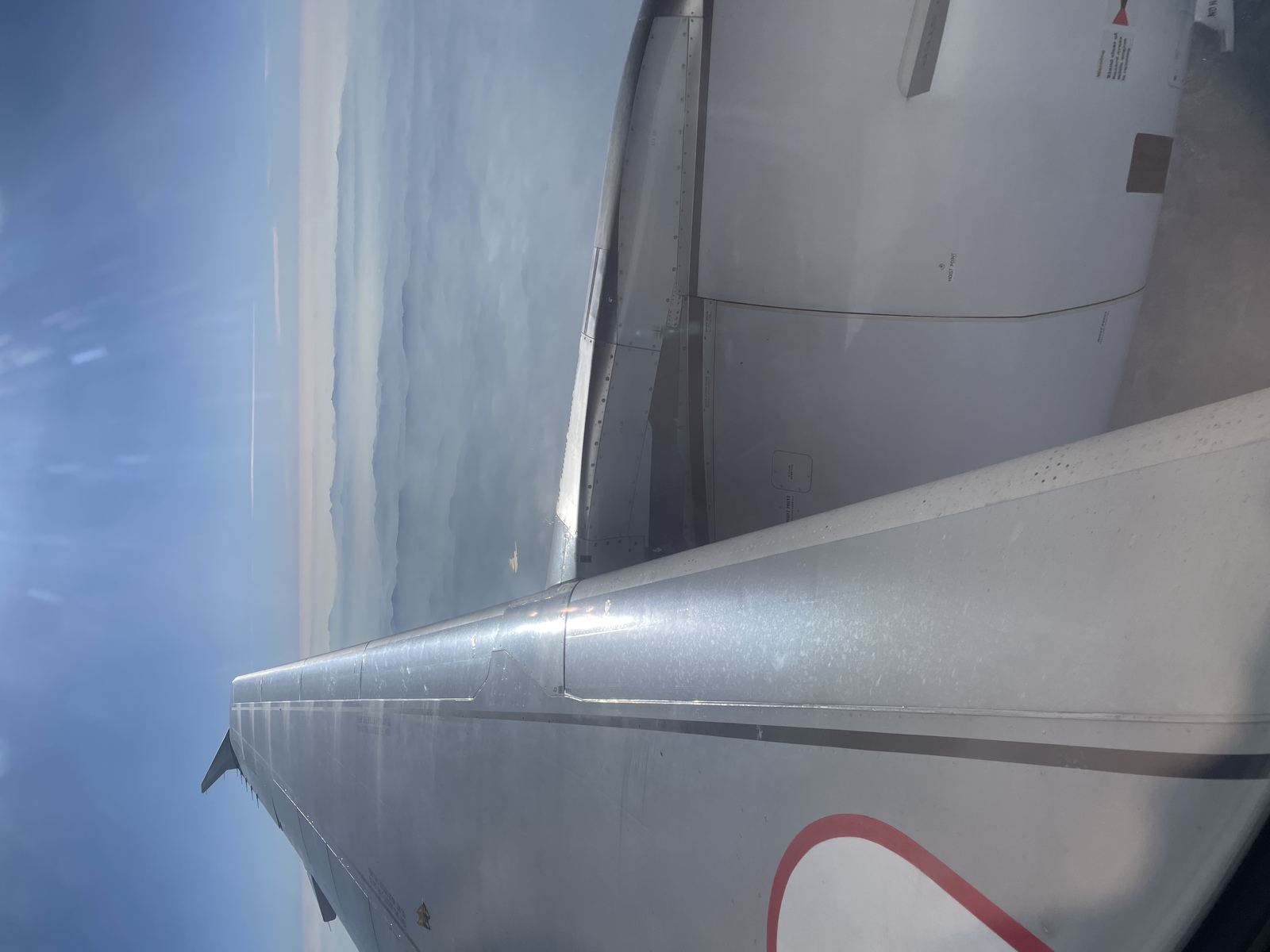
Now, heading from Bangkok to Phayao, since that city doesn't have an airport, we're going via Chiang Mai this time. It seems the university arranged it this way so Mr. S, who's visiting Thailand for the first time, could see some sights. Chiang Mai is in Thailand's mountainous north, so the mountain ridges were covered in low-lying clouds. Even Mr. S, who specializes in meteorology, said it was a very beautiful sight. On this day, the infamous PM2.5 pollution typical for this season wasn't too bad yet.
Video of landing at Chiang Mai Airport. Since the airport is right next to the city, you can see departing planes directly overhead from hotels in town. The airline was VietJet Air, which I flew for the first time this trip. All expenses, including the hotel stay, were covered by the university. I'm grateful.
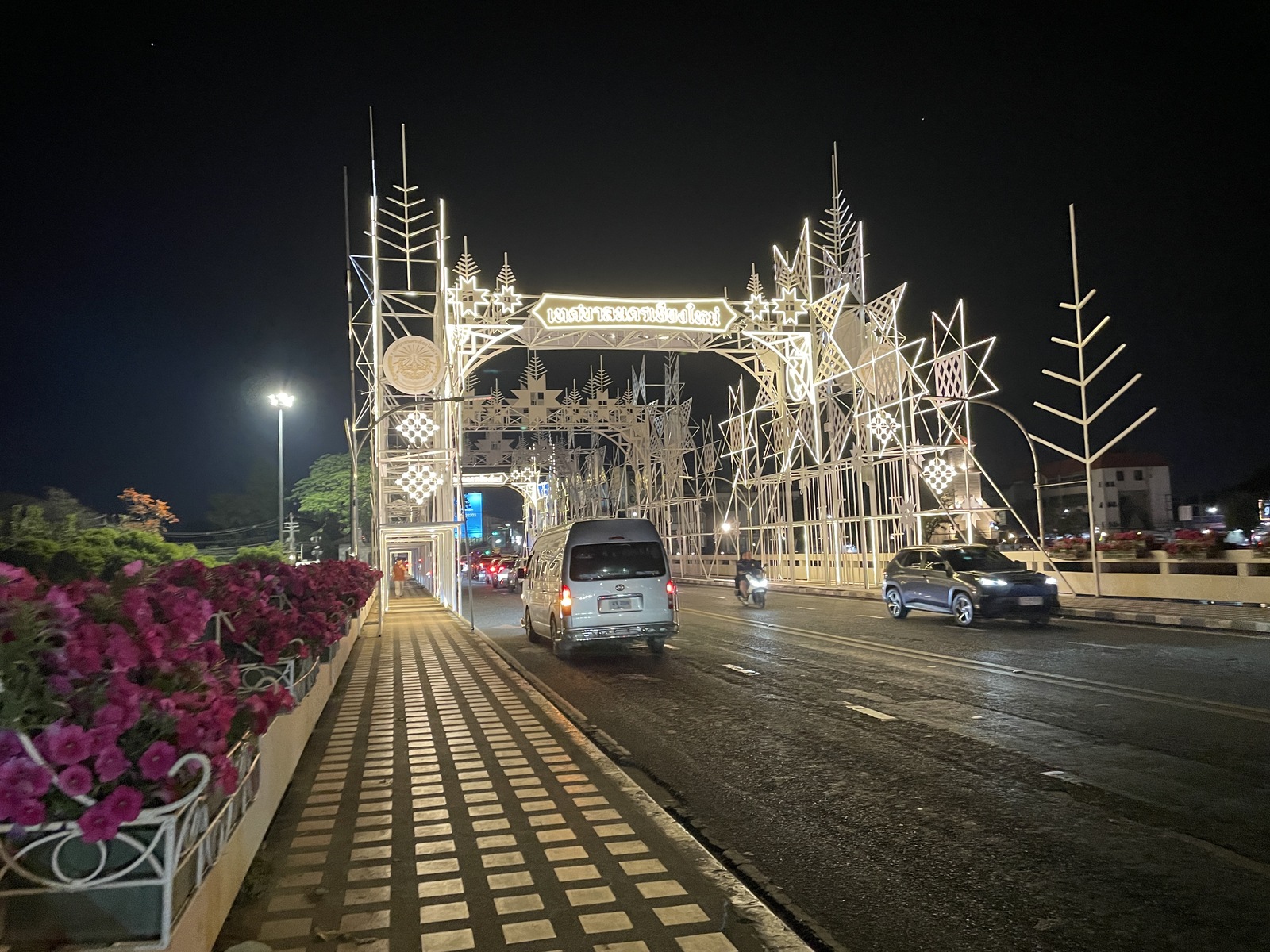
In the evening, we took a stroll for dinner, just the two of us. Since we stayed at a hotel on the east side of town, we went to see the bridges over the river. The cool climate really made it feel like we were in the north. By the way, I heard morning temperatures can sometimes drop below 15°C. Oh yes, this was also the first time I clearly saw Canopus with the naked eye overseas. I'll introduce that in the next Mukdahan chapter.
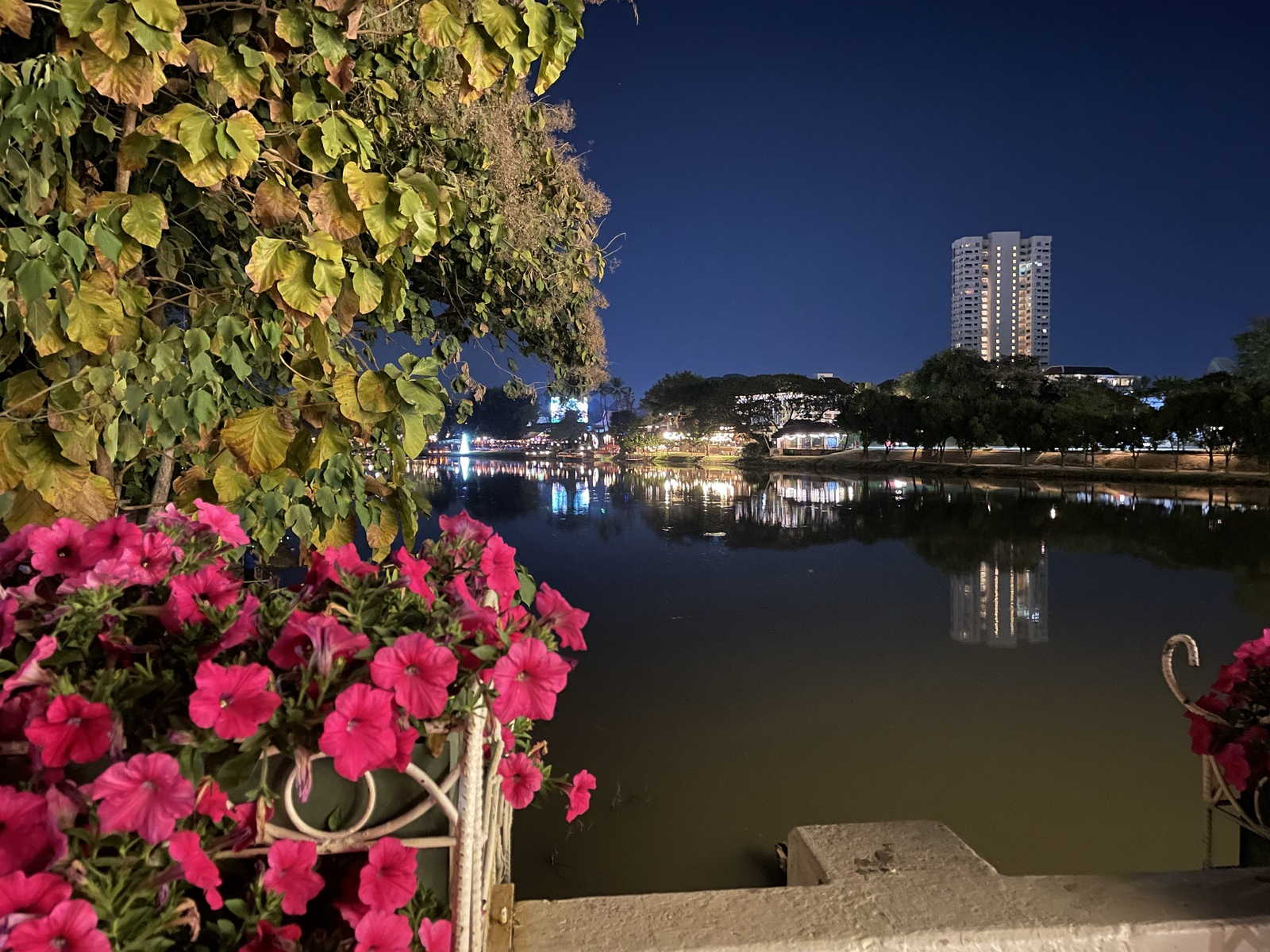
Flowers along the river and distant buildings. Quite a nice view. The flowers appear to be a type of petunia. The bougainvillea here is also currently in full bloom.
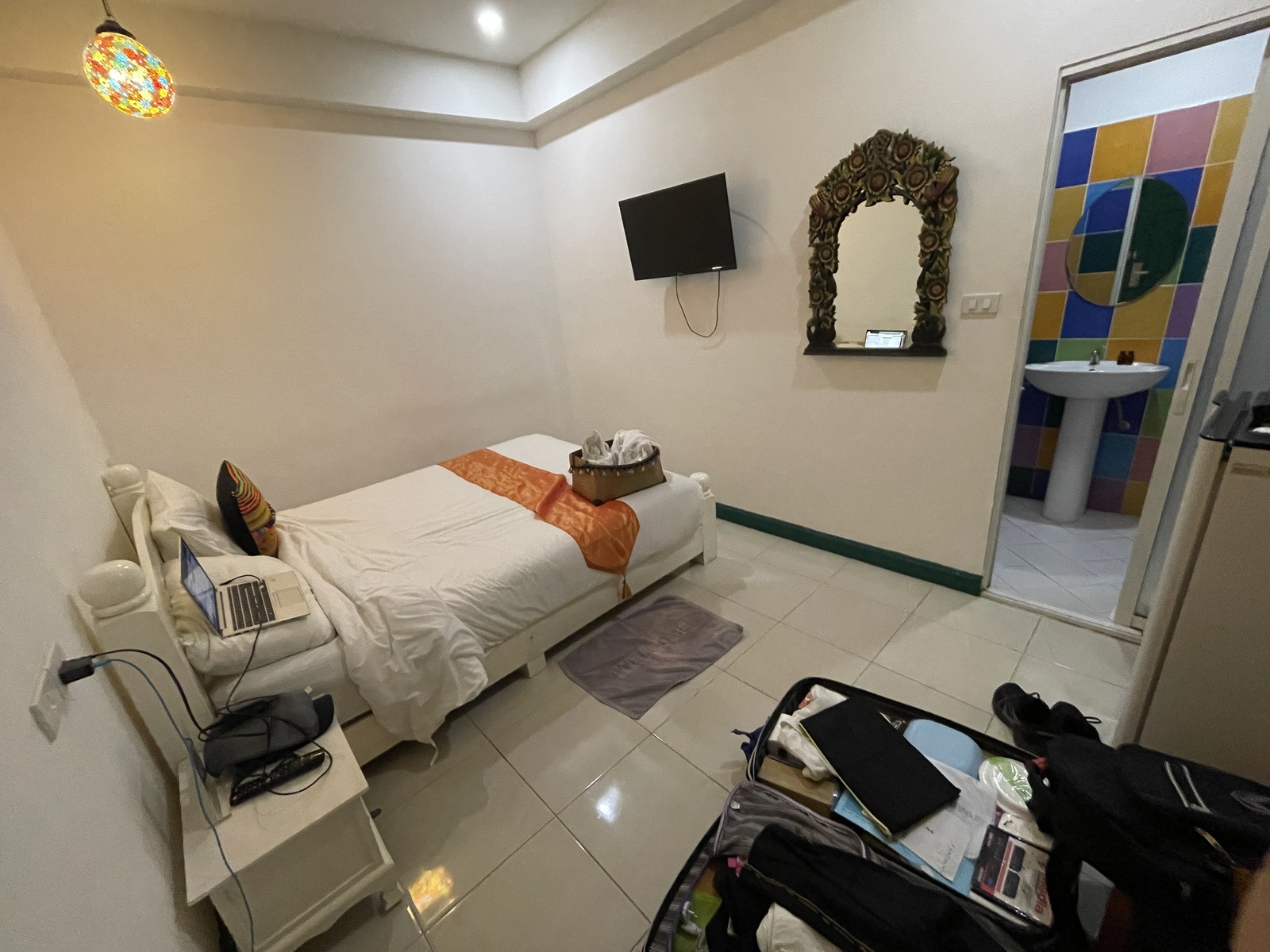
This is the accommodation I booked in the eastern part of Chiang Mai's new town. Having the TV on the wall is very inconvenient for preparing PowerPoint presentations, but it seems many hotels are like this. I probably won't stay here again next time.
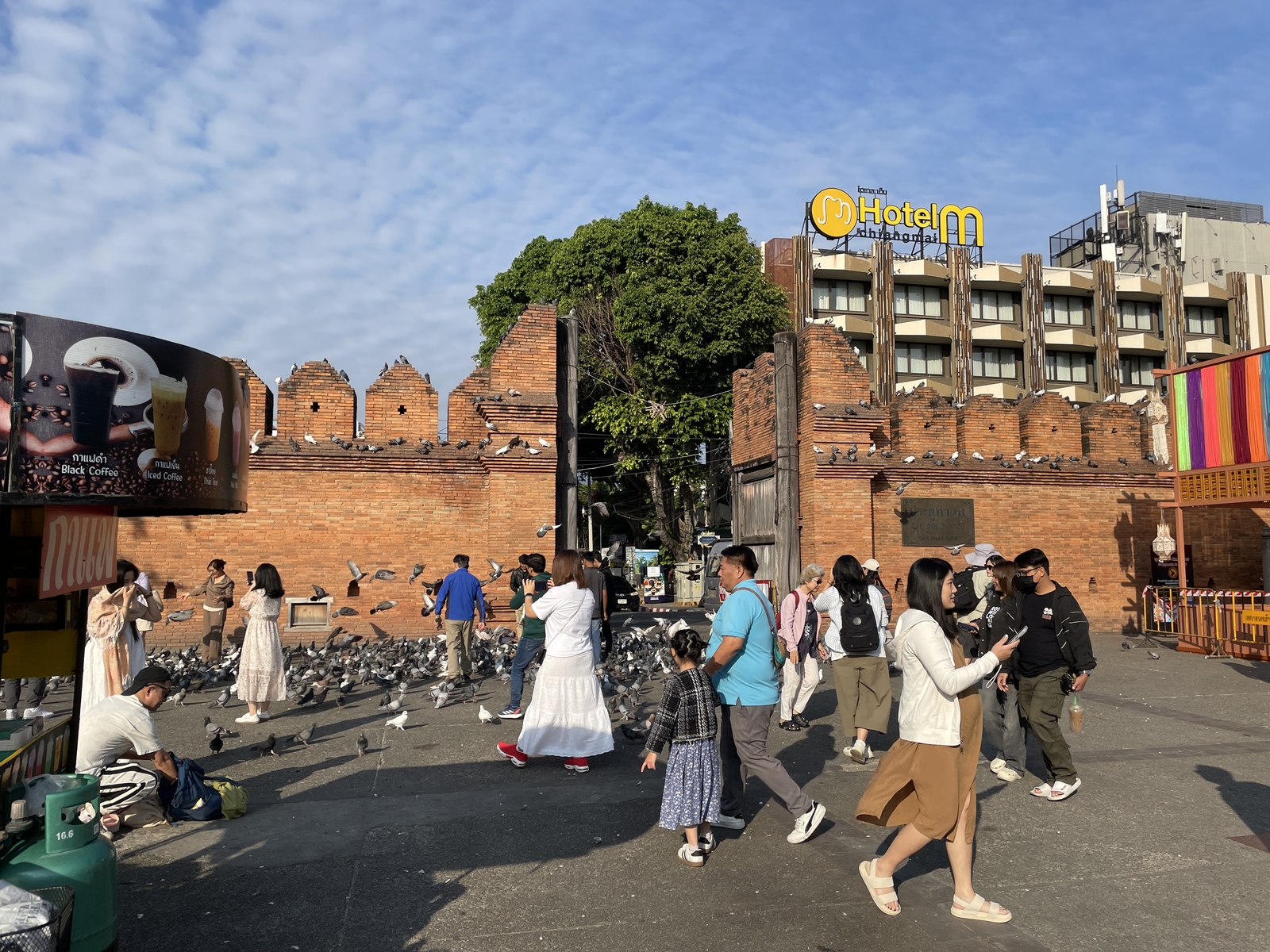
Now, Dr. T, who earned his solid-state physics Ph.D from JAIST in Japan after studying at the university, came to pick us up at the hotel. We promptly headed to the morning scene at Tha Phae Gate (the entrance to the old city). Chinese tourists were quite noticeable. I suppose direct flights exist because of the geographical proximity.
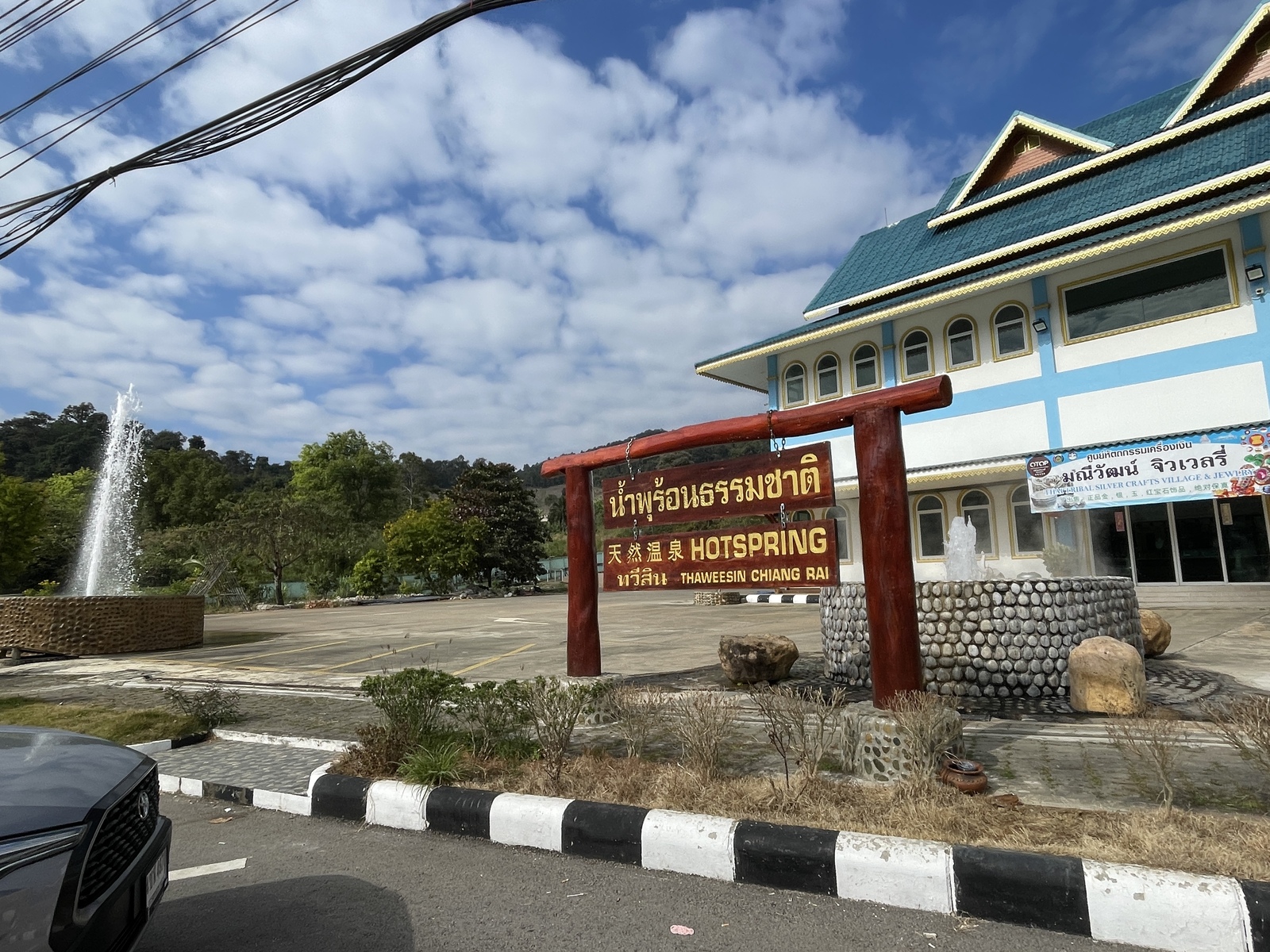
The overland route from Chiang Mai to Phayao takes about three hours, crossing two mountain passes. Along the way, we stopped at a natural hot spring resort, which is quite rare in Thailand.
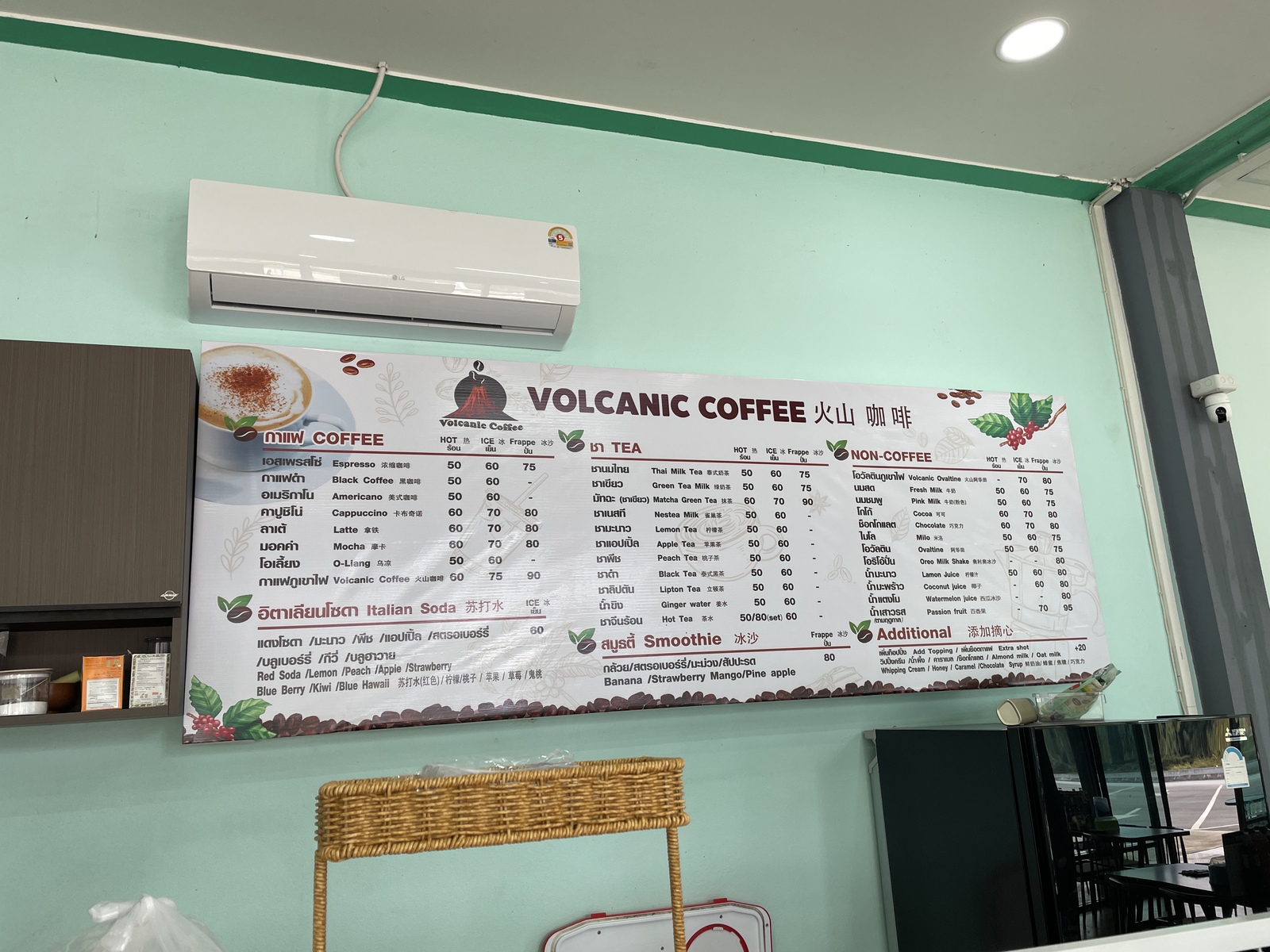
Of course, we tried the volcanic coffee, but it was just ordinary coffee.
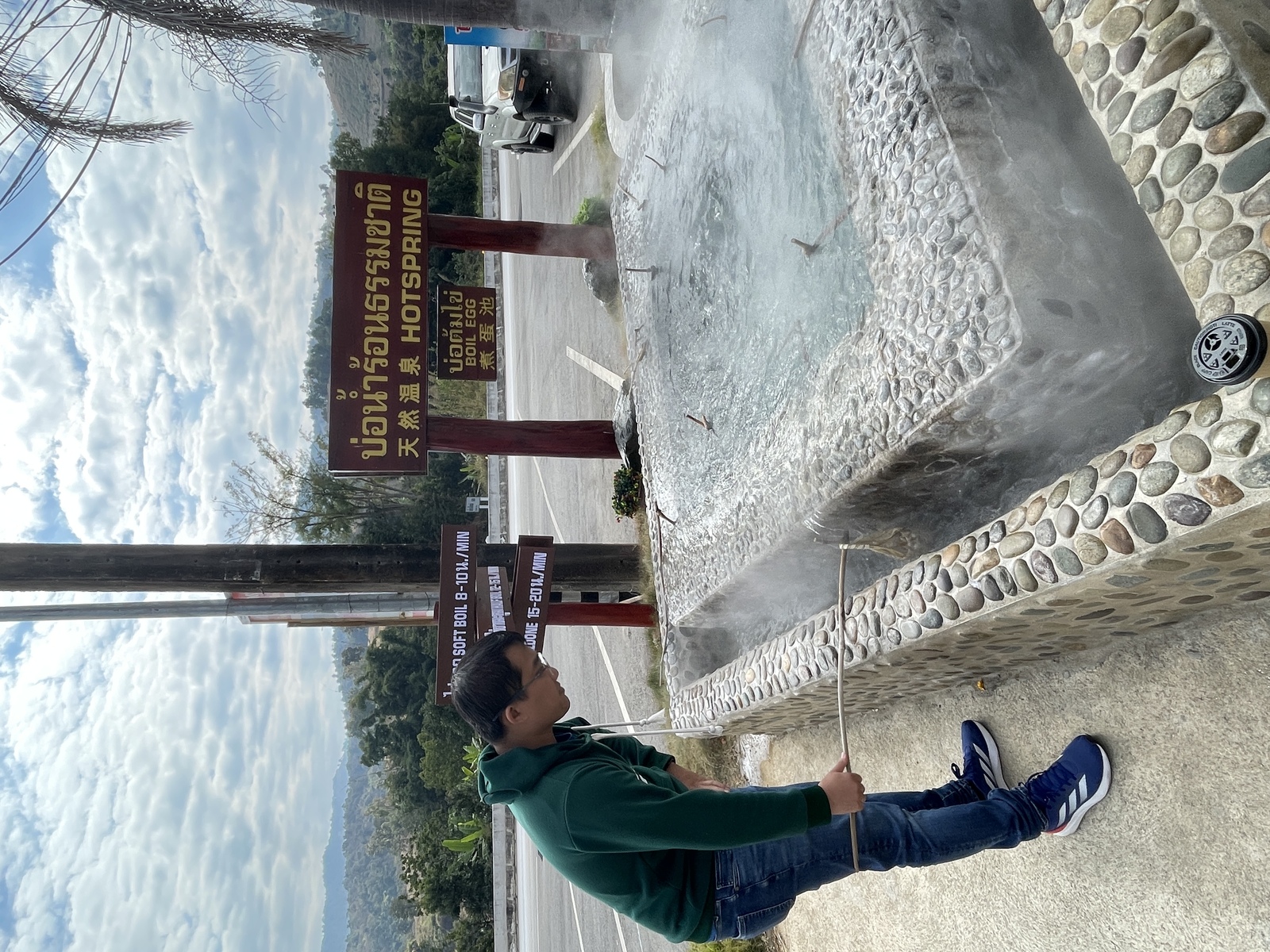
Dr. T bought eggs and is boiling them in this hot spring water. They seemed like souvenirs for colleagues. It's too hot to touch by hand. Plus, the heat is radiating into this concrete floor. Hot springs might be relatively rare in Thailand, which has no active volcanoes. I can totally see why Mount Aso and Mount Fuji are popular with Thai people.
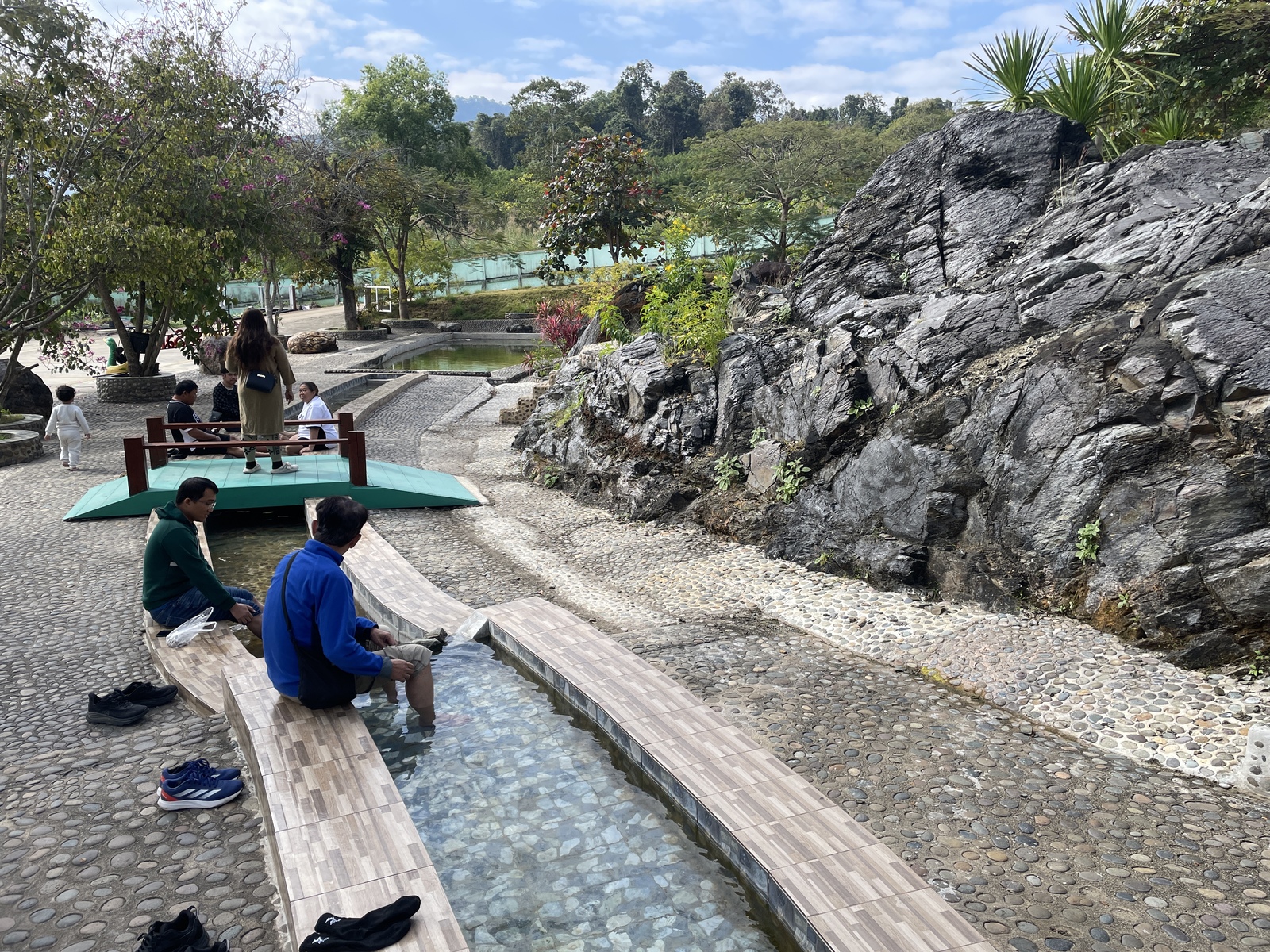
Behind the building was a foot bath, familiar even in Japan. This one was a comfortable temperature. With few visitors on a weekday, it seemed like a hidden gem among Thai tourist spots.
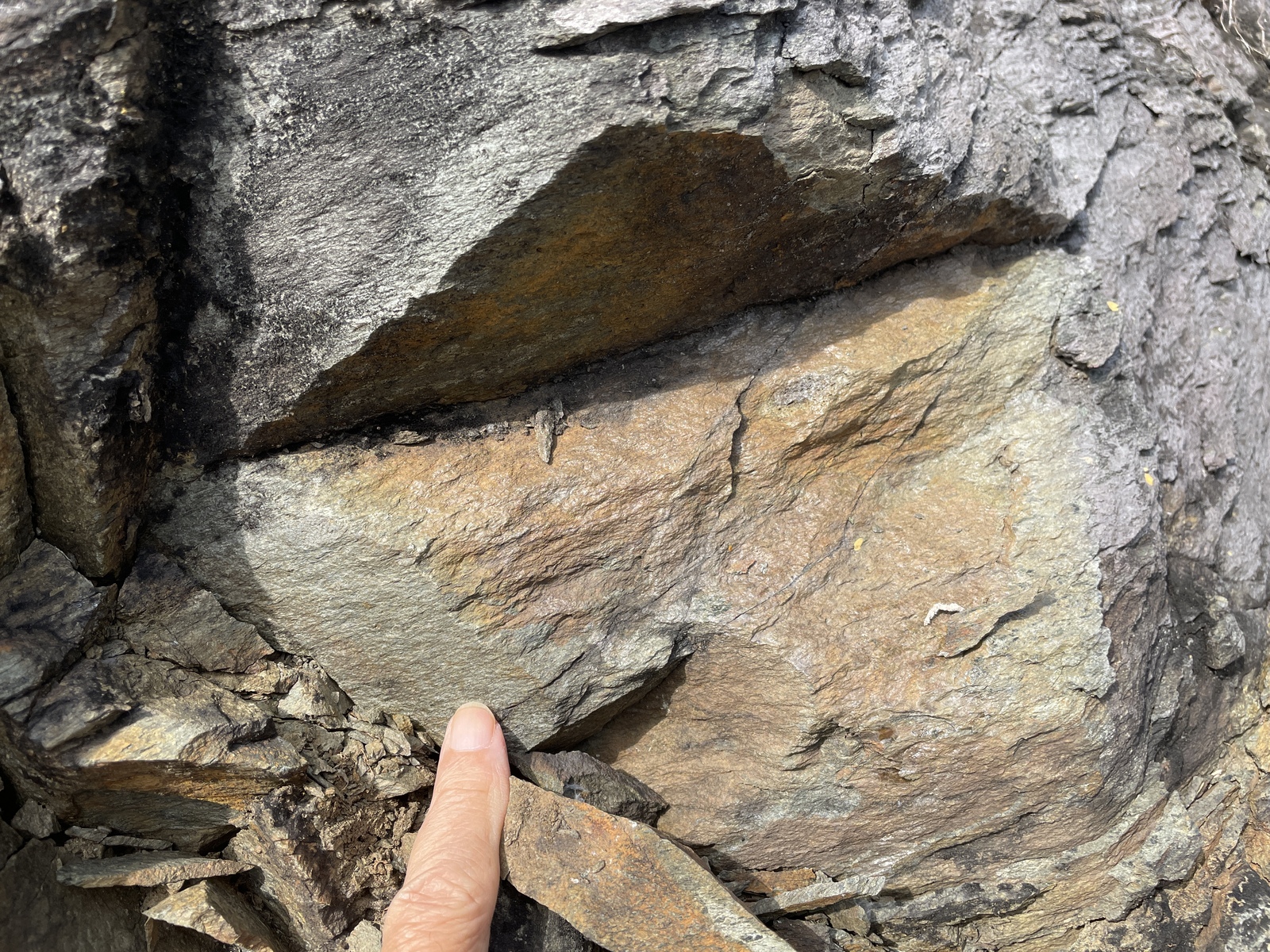
Next to that foot bath was an outcrop. Looking at it, it appeared to be crystalline schist. I decided to look it up later. ーーーSo I looked it up. It was described as Devonian crystalline schist. Furthermore, hot springs in northern Thailand are said to be influenced by active fault activity.
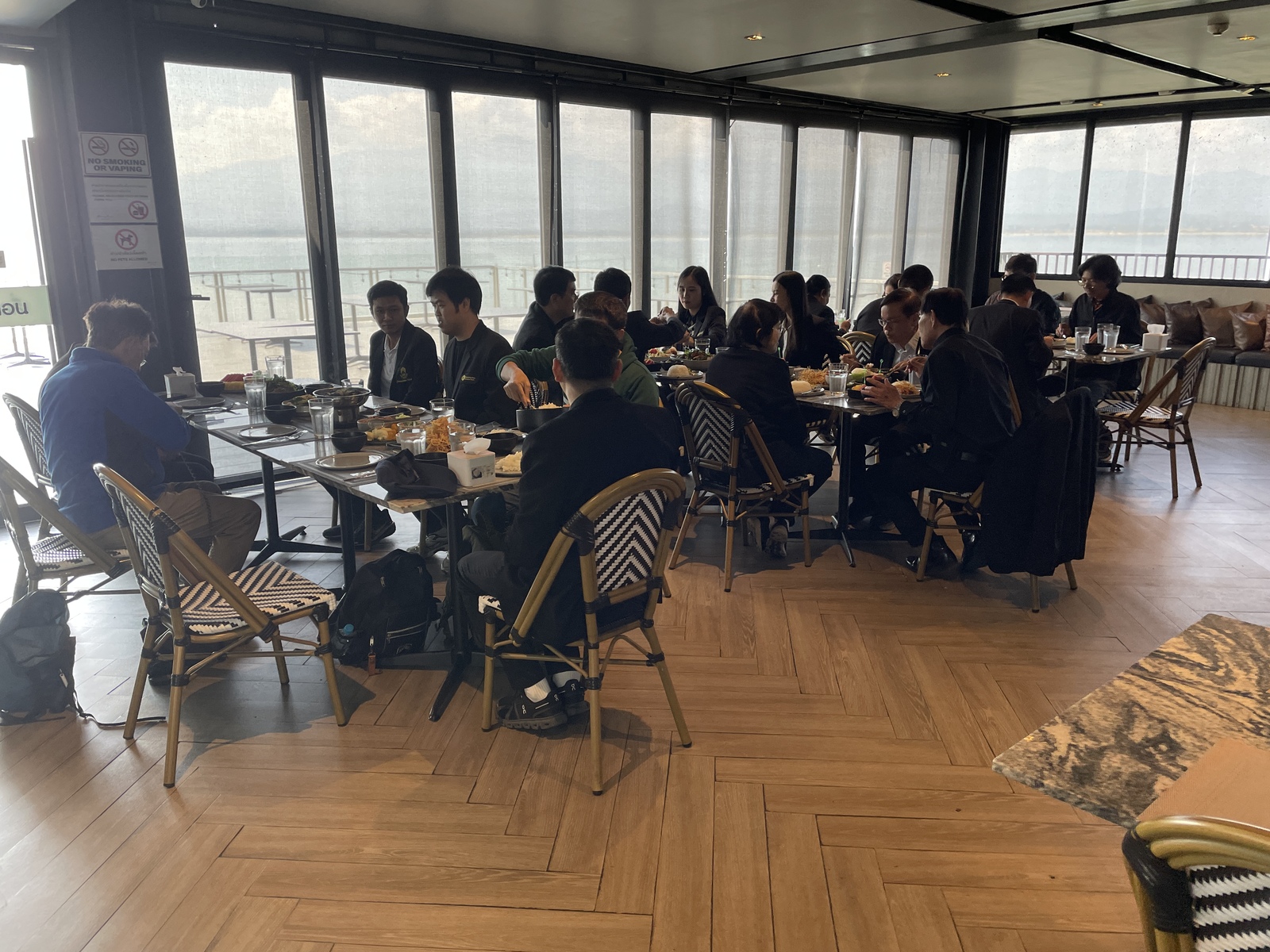
We had lunch at the university, but it turned out a faculty meeting was being held in the conference room of the hotel where we were staying. We ended up having lunch alongside the main group of attendees gathered there. Visible in the background is the largest artificial lake in northern Thailand.
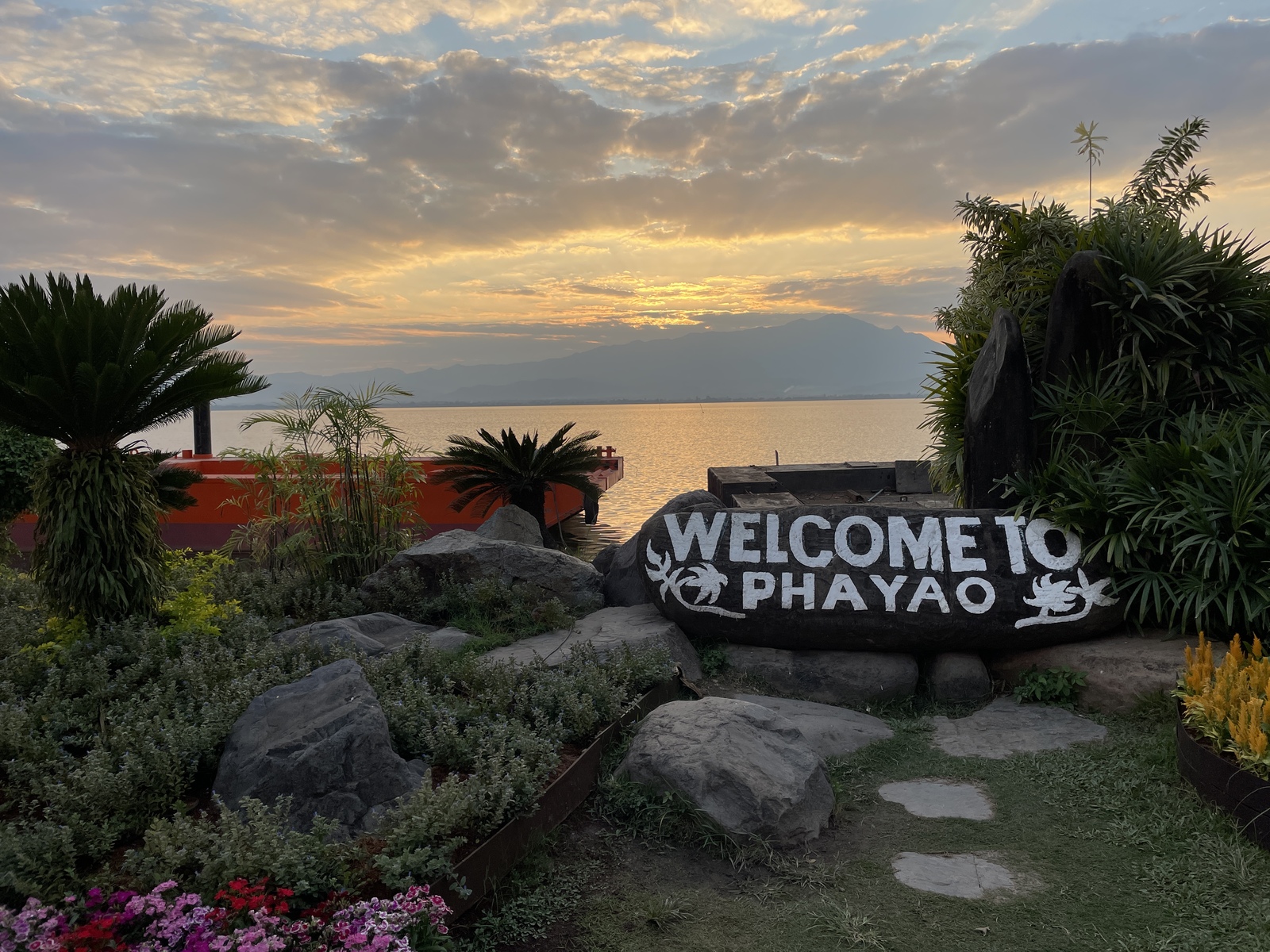
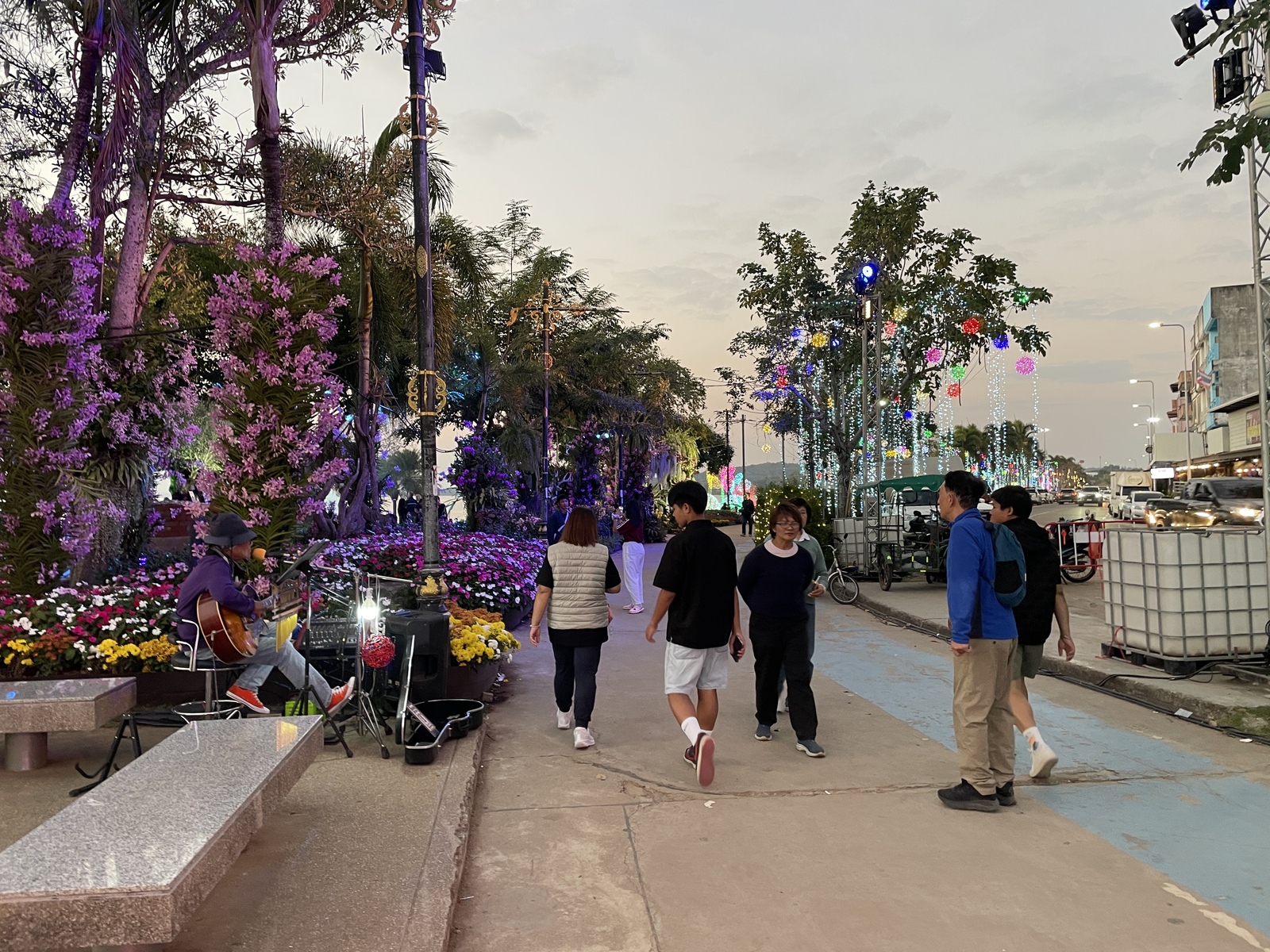
I've mentioned before that the scenery resembles Japan's Lake Shinjiko.
Just like last year, the New Year Light Festival is being held at this time, drawing large crowds of tourists. The light decorations were truly beautiful at night, but I forgot to take photos.
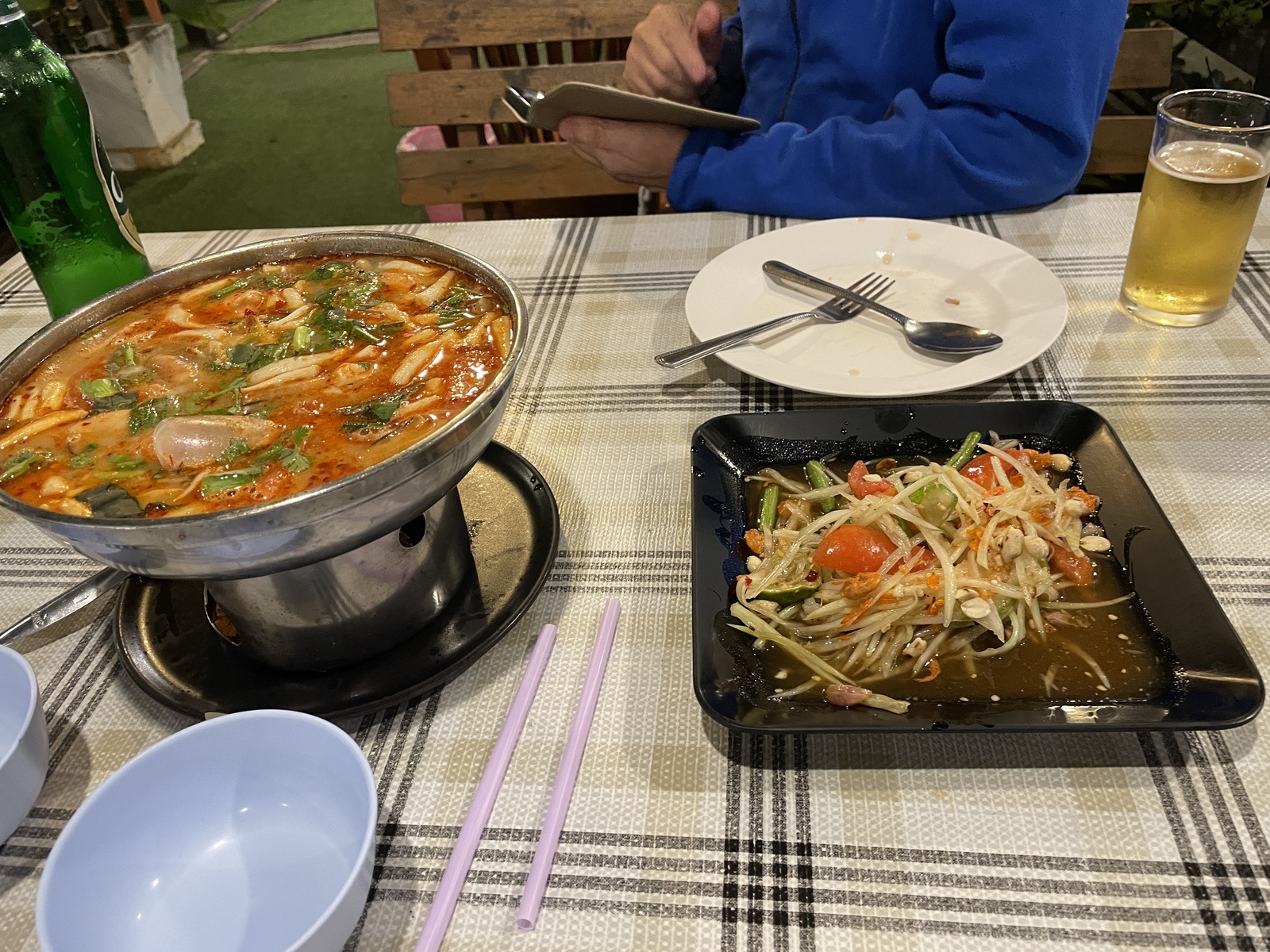
That evening, the two of us had dinner at a restaurant in town overlooking the lake. S-san really wanted to try Thailand's two major dishes: Tom Yum Goong and Som Tam (papaya salad). We asked the restaurant to adjust the spiciness for both, but they were still spicy!
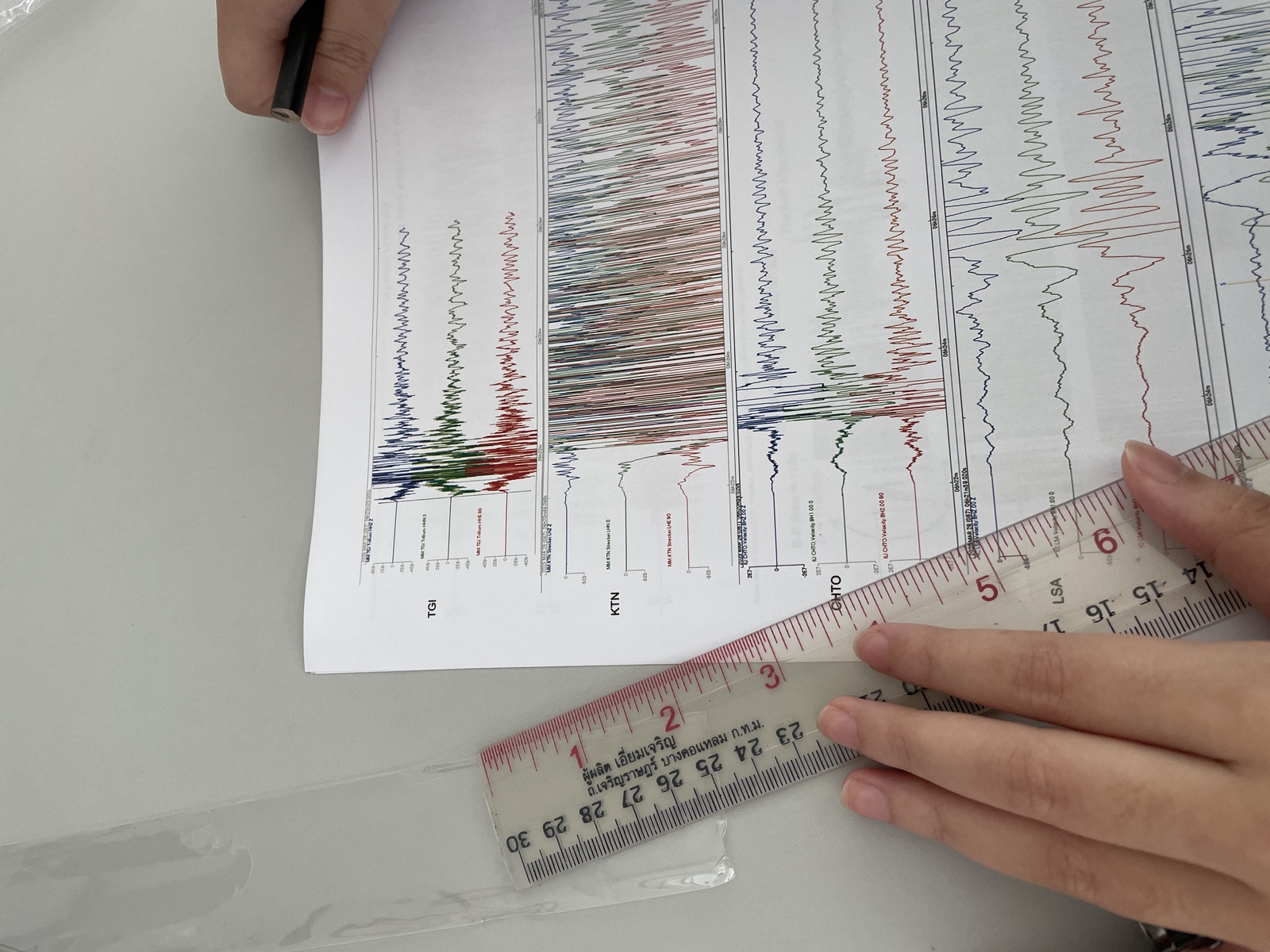
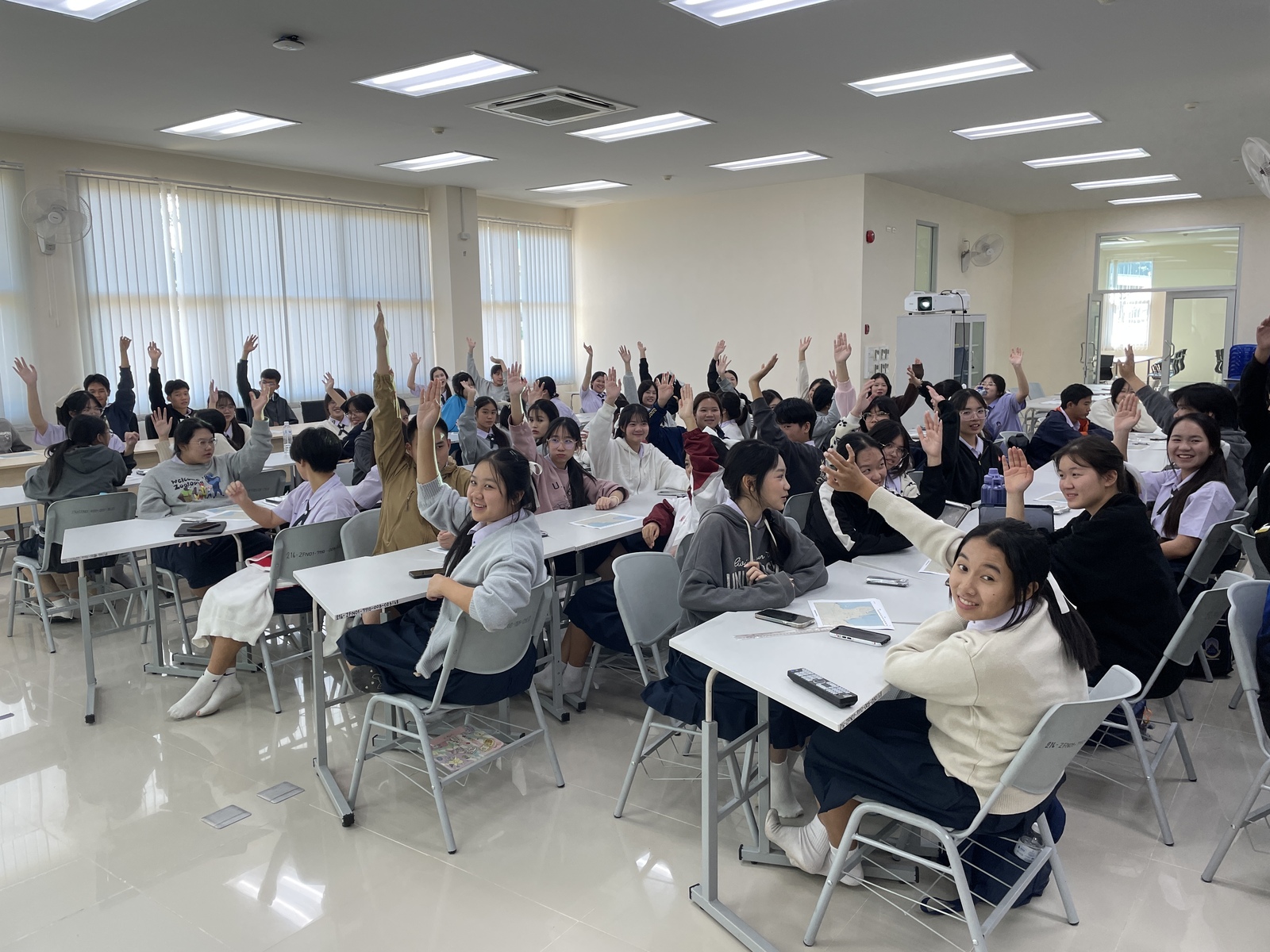
This time, the lecture and workshop were only for the following day. The lecture was a three-part series. Part 1 explained the overview of last year's Myanmar earthquake and why such strong shaking—enough to collapse a building under construction in Bangkok, over 1000 km from the epicenter—was observed, focusing on the physical phenomena involved. Part 2 was a practical session (this photo) mapping the earthquake's epicenter using data from the global seismic network and my own seismometer data (from two locations). Finally, Part 3 covered the theme of past, present, and future seismic activity in northern Thailand. The materials for this day are available below for your perusal. http://seagull.stars.ne.jp/2026.../For_Thailand2026.html
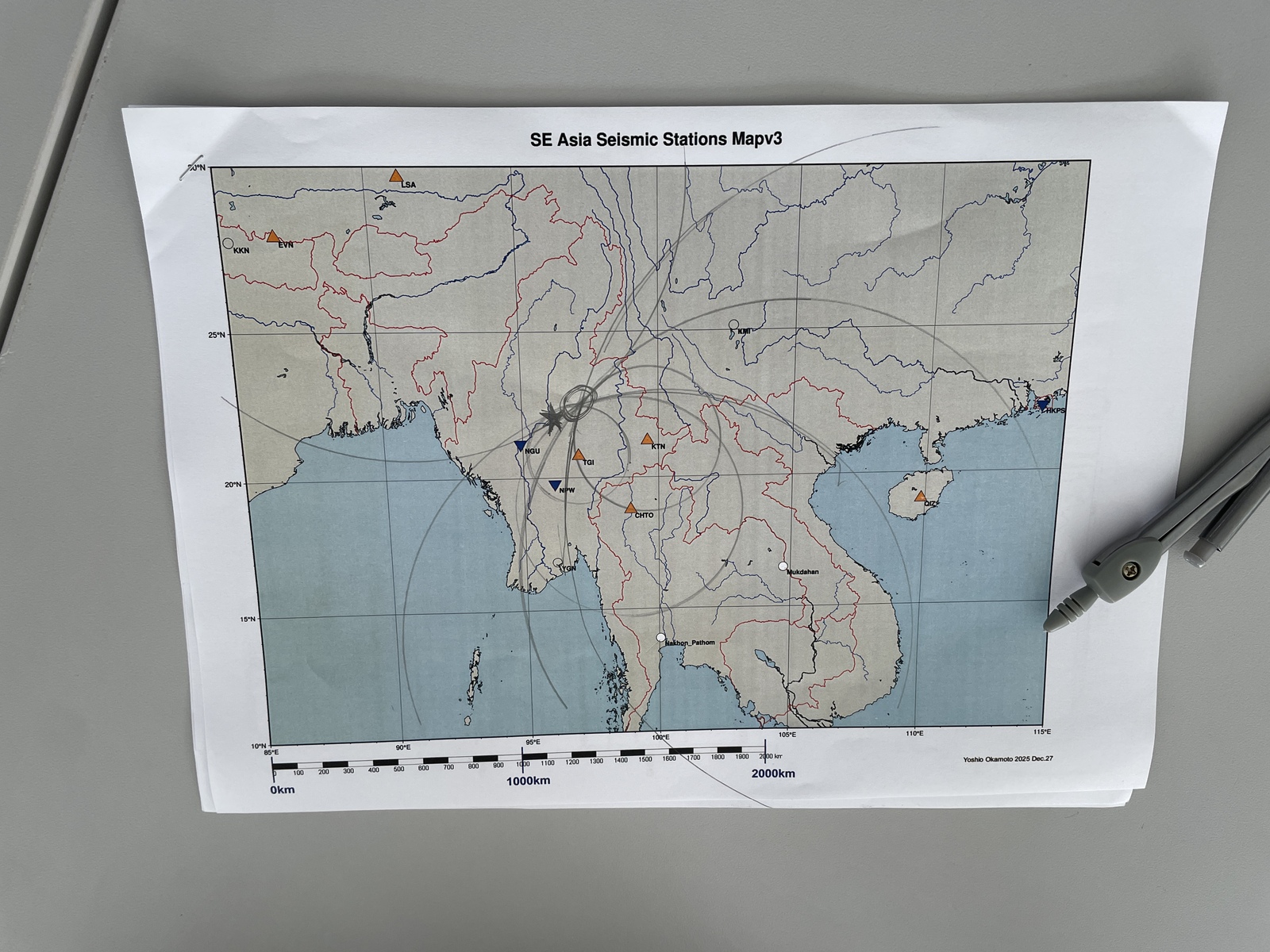
This is the best student's practice result. It was determined to be remarkably close to the official epicenter. Not everyone achieved this, though. Incidentally, details of this waveform data were explained in a post from December 27th last year.
These first-year high school students seem quite energetic. I believe this was in response to a question about who experienced the shaking from last year's Myanmar earthquake? Quite a few of them, huh. This day involved SCiUS class students in the morning—a science-focused program for affiliated high school students. The afternoon session was for general class students. Some students in the afternoon seemed to struggle a bit with math and English, so I skipped over some of the finer details. They also hadn't learned logarithms yet.
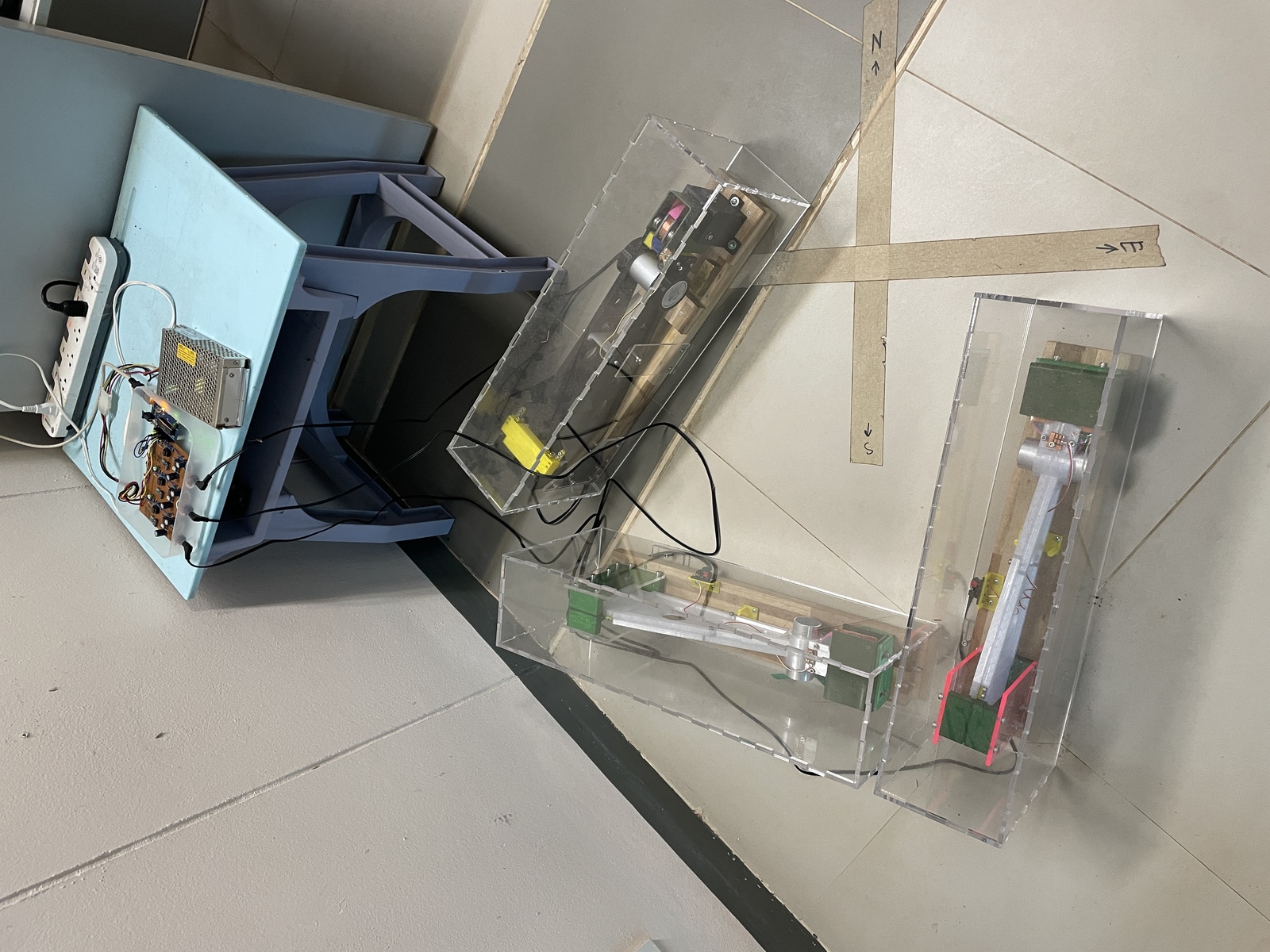
Afterward, I adjusted my seismometer installed at this high school and updated its control program. While I was at it, I replaced the old photo amplifier with a new one.
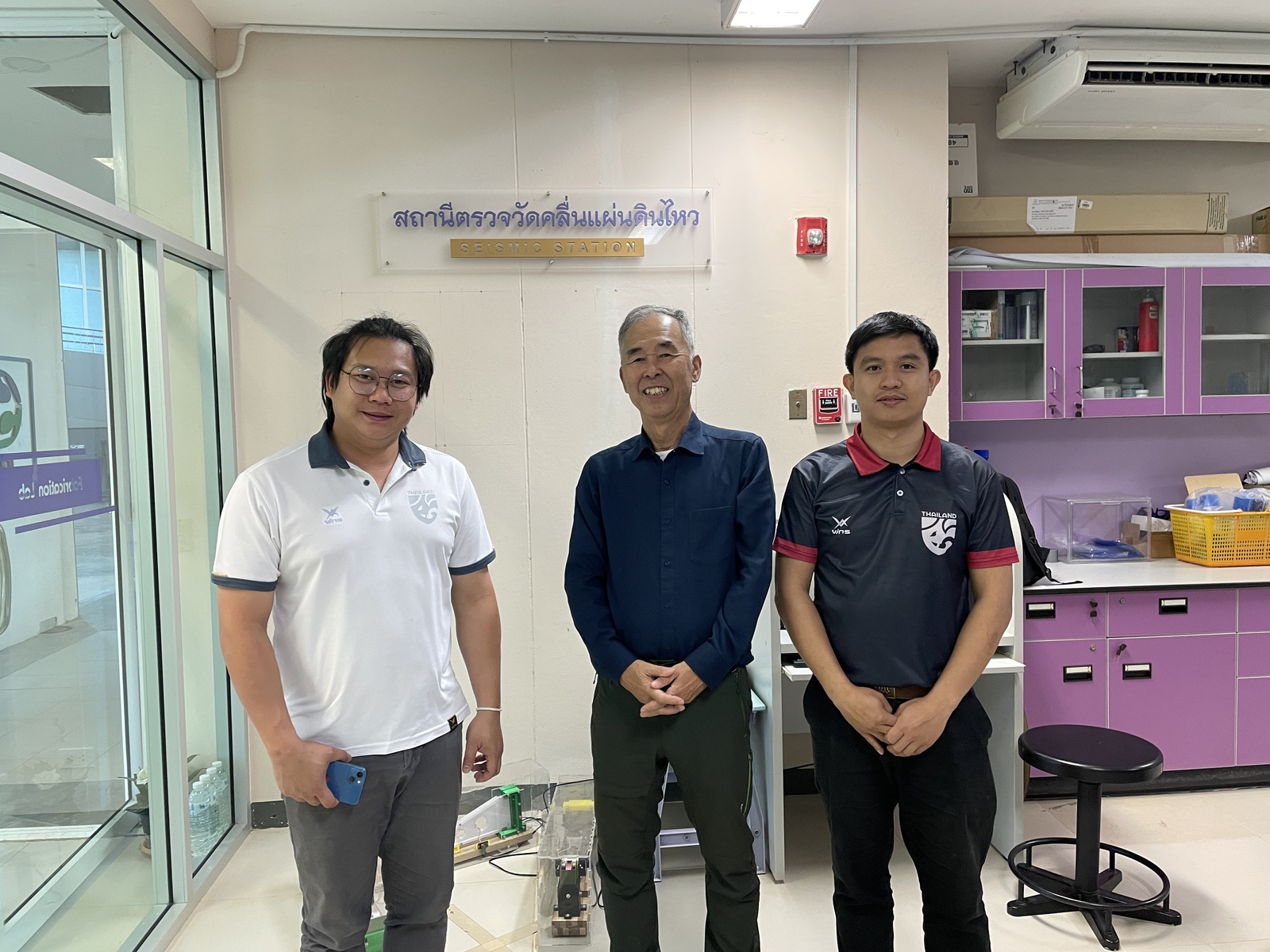
The demonstration high school teachers specializing in information and physics who assisted with the work
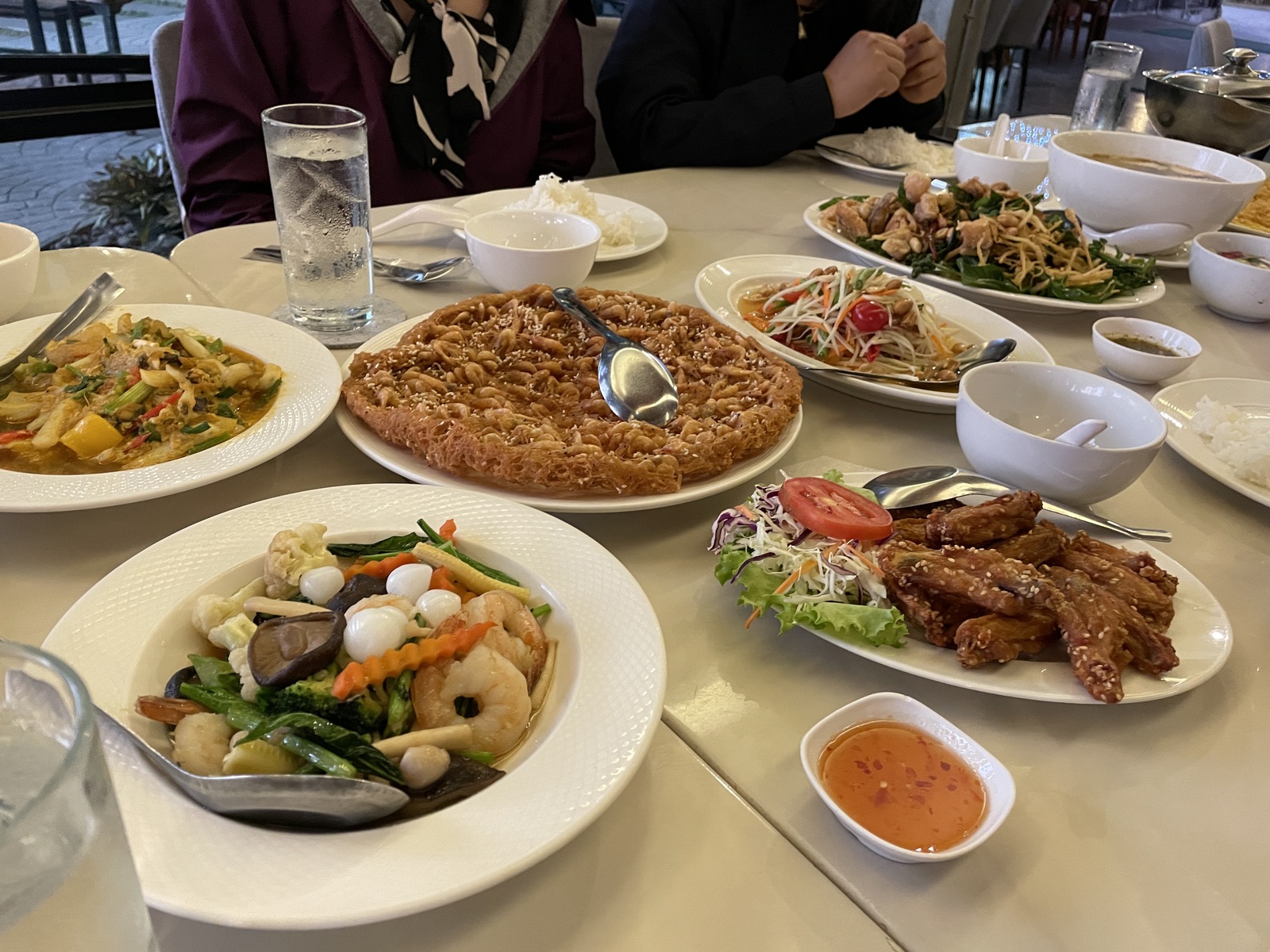
We enjoyed a luxurious dinner at a lakeside restaurant. In the center is my favorite rolled omelet (kai jao). Including the hotel breakfast, it was all very much appreciated.
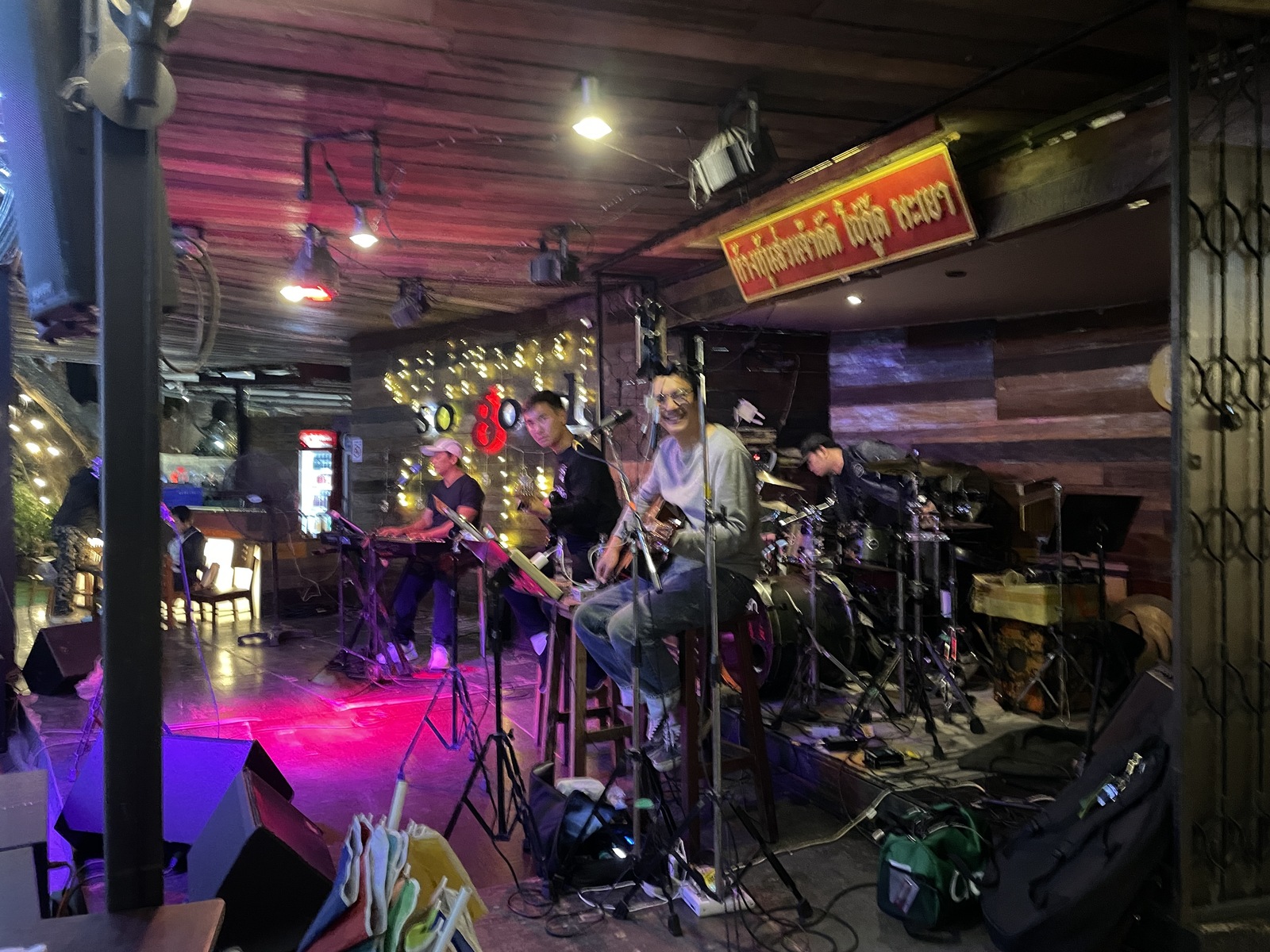
In slightly upscale restaurants, you'll find bands performing live like this. They kindly smiled for the photo when I asked.
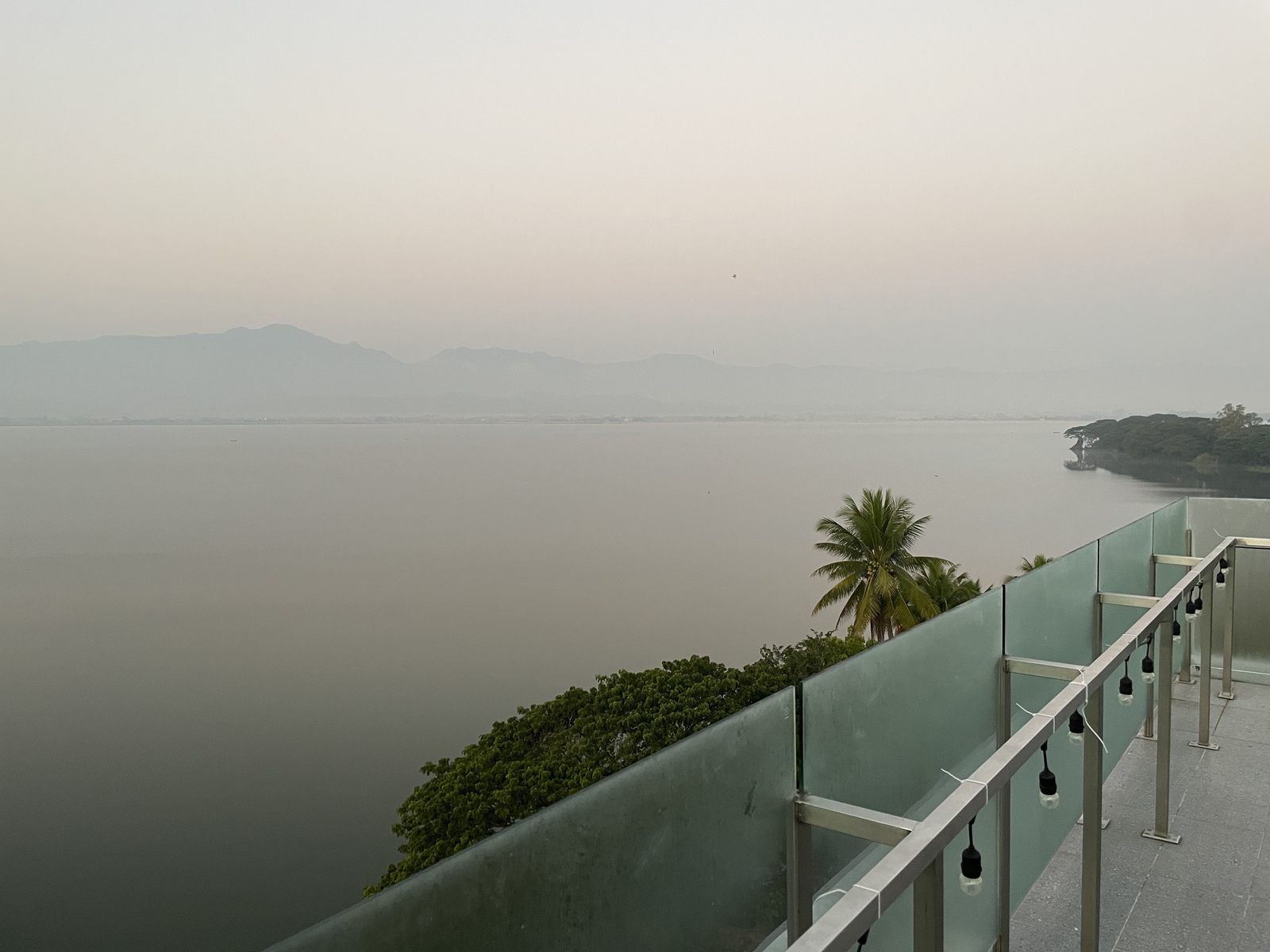
A scene I often photographed outside during the hotel breakfast. Thick fog covered the lake, along with wind-swept grasses often seen in northern Thailand this time of year. Apparently, come February, PM2.5 mixes in, changing how it looks.
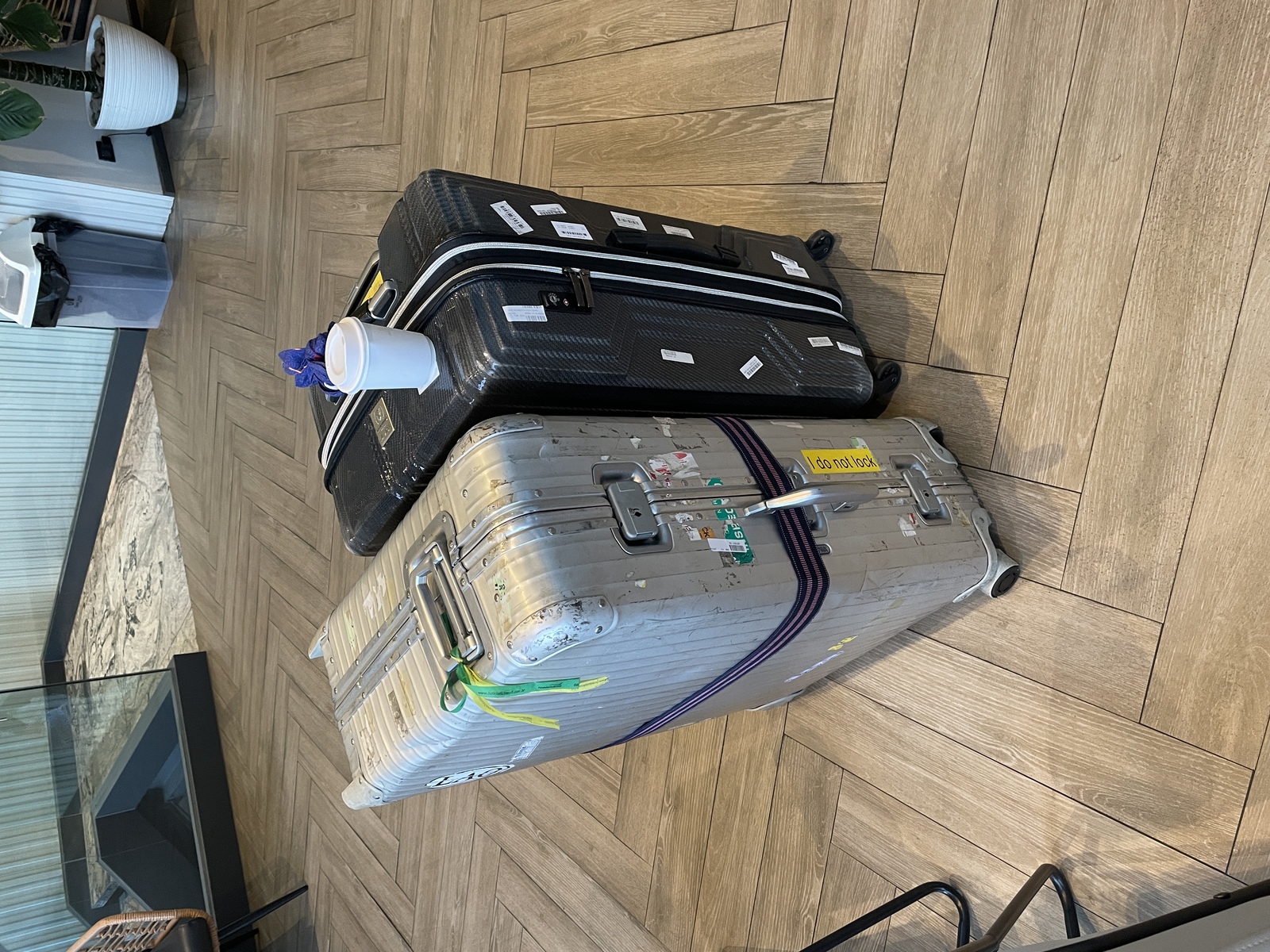
Two suitcases lined up at the hotel entrance. Prof. S, who is also an overseas aid expert, still cherishes his well-worn Rimowa suitcase, which he says he's used for 27 years. He shared his experiences in Ghana with us. He told us about a young woman in the Japan Overseas Cooperation Volunteers program in Ghana who had shaved her head. When he asked why, she replied that she did it because she couldn't take baths. He taught me that Japan also has many young people who venture overseas and carry out wonderful activities. This is one of the wonderful stories I heard this time.